
2025.07.17

Enabling households to use up vegetables and prepare fast and easy meals helps reduce food waste! Mitsubishi refrigerators now feature a new function called “Dekichau V Reito,” named for a Japanese word meaning “available.”
The new “Dekichau V Reito” function is a fantastic feature that enables you to freeze vegetables and then crush them by hand without having to thaw them first. This contributes to reducing food waste, which makes this refrigerator highly recommended as a replacement for your old one!
Mitsubishi Electric Corporation launched six series and twelve models of refrigerators featuring the new Dekichau V Reito function in fiscal 2025. The series includes the MZ, MD, WXD, BD, WZ, and JW, all of which have been well-received for their ability to help reduce food waste.
The new Dekichau V Reito feature, available in family-sized refrigerators with a capacity of 450 liters or more, allows users to freeze vegetables in bags for easy crushing by hand as needed, eliminating the need for knives and cutting boards and saving time in the kitchen. Mitsuyo Fujisawa from the Refrigerator Sales Section of the Marketing Department at Shizuoka Works explained:
“In addition to extending the storage life of vegetables, users can easily adjust the piece size of their vegetables to suit their daily meal plan, which expands their menu repertoire and helps them use up their vegetables without any waste. Another advantage is that there is no need to thaw the vegetables before use, which also reduces the amount of washing up.”
The new series also includes existing features like the Kirechau Shun Reito AI, which enables users to freeze food without any loss of flavor and then easily cut off only the desired amount without having to thaw the entire portion. Additionally, it has a Shimo Guard AI that prevents frost buildup based on usage conditions.
Vegetables account for greatest food waste
Solve kitchen problems with Dekichau V Reito
Dekichau V Reito has received a lot of attention in relation to issue of food waste. A survey conducted by the Ministry of the Environment in fiscal 2022 found that Japan generated a total of 4.72 million tons of food waste that year. Of this total, 2.36 million tons originated from households. From the perspective of increasing waste disposal costs and the Sustainable Development Goals (SDGs), greater awareness around reducing food waste is urgently needed. Among various food items, vegetables account for the largest proportion of food waste, making up 30% of the total. Leafy vegetables, in particular, are often perhaps reluctantly discarded as they tend to lose their color quickly, even when stored in the refrigerator’s vegetable compartment.
While frozen storage has long been regarded a good way to extend the shelf life of vegetables, it has also traditionally involved challenges, such as the need to size the chopped vegetable pieces based on their intended use and the added effort of pre-processing them by either blanching or stir-frying.
“Normally, using frozen storage involves a lot of effort,” explained Ms. Fujisawa. “For instance, if we wanted to stir-fry cabbage, we had to chop it into large pieces, but if we planned to make dumplings, we would need to cut it finely. With Dekichau V Reito, however, we can crush our frozen vegetables into various sizes depending on what we’re cooking without any chopping or pre-processing. This makes it easy to use them in a variety of dishes.”
Designed specifically to respond to these challenges, the new Dekichau V Reito feature reduces cooking time, enhances menu versatility, and prevents food waste.
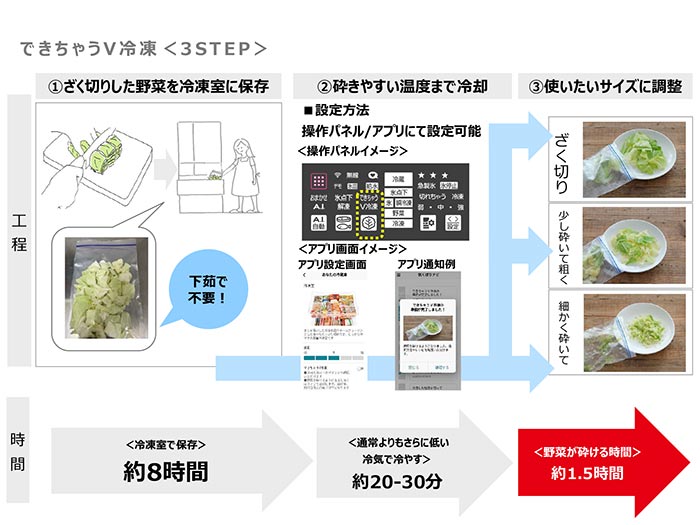
Dekichau V Reito [Three STEPS]
Pursuing the original function of refrigerators
has led to a fourfold increase in sales
So what aspects were prioritized during development? Narihiko Koike from REF Advanced Development Group, Refrigerator Manufacturing Department at Shizuoka Works elaborated. “Development began around 2020,” he explained. “Initially, we started development with the concept of providing new value to support everyday cooking rather than addressing food waste. As development progressed, we had discussions with various colleagues and believed that food waste reduction could also be proposed as a feature.”
Describing the challenges faced in developing the new feature, Mr. Koike continued:
“We needed to delve deeper into the scenarios for after the vegetables had been frozen and crushed, specifically, how customers would use them. For example, what are the advantages of freezing vegetables and then crushing them by hand? What recipes can be created using hand-crushed vegetables? We began to consider this function from the perspective of cooks. As a result, we were able to propose a wide range of value, from reducing food waste to shortening cooking time. We hope that people will use this product to enjoy a new cooking experience.”
The response since launch has been significant. With the growing awareness of food waste and the user-friendliness of Dekichau V Reito, sales have increased fourfold compared to previous models.
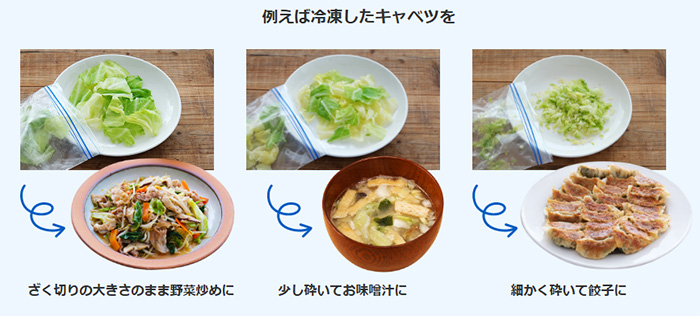
Examples of cooking cabbage that has been frozen with Dekichau V Reito
“While many companies are concentrating on enhancing the IoT features of their refrigerator models, we have been dedicated to manufacturing products that prioritize the fundamental function of refrigeration—keeping food cold,” said Ms. Fujisawa. “One example of this is our Easy Cutting, Instant Freezing feature. In fact, we developed Dekichau V Reito as a result of our faithful pursuit of essential functions rather than going after newfangled features. Dekichau V Reito does not require any detailed settings or technical skills, so even elderly householders and children without smartphones can use the feature to produce crushed vegetables. So use of the product is not restricted to a specific age group or gender, and its focus on the original function of refrigeration has contributed to increased sales.”
The bonus sales season will start in the summer. Replacement demand is currently focused on large capacity and suitability for home installation. Ease of use is also essential. Additionally, there are no competitors offering features comparable to Dekichau V Reito at this time. As Ms. Fujisawa put it: “Customers are increasingly seeking environmentally friendly home appliances. As inflation continues to put pressure on household budgets, it is essential to reduce food waste and minimize electricity bills. Our new product is a refrigerator designed to suit everyone, from children to the elderly. The first thing we want customers to know is that it can freeze vegetables. We hope that many people will enjoy the convenience our product provides.”
INTERVIEWEES
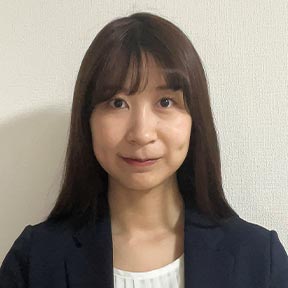
MITSUYO FUJISAWA
Refrigerator Sales Section,
Marketing Department at Shizuoka Works
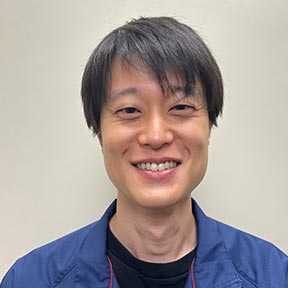
NARIHIKO KOIKE
REF Advanced Development Group,
Refrigerator Manufacturing Department
Mitsubishi Electric Corporation
2-7-3 Marunouchi, Chiyoda-ku, Tokyo(Tokyo Building)
Established in 1921, the Mitsubishi Electric Group has been guided by “Our Philosophy,” which places sustainability at the core of its management. It operates businesses in social systems, energy systems, defense and space systems, factory automation (FA) systems, automotive equipment, building systems, air conditioning and home appliances, digital innovation, and semiconductors and devices. The Mitsubishi Electric Group aims to transform into an "Innovative Company" that generates value through bold thinking and a willingness to embrace risk, driving growth and addressing social and environmental challenges.