
2026.02.19

Cinematic Look Made Possible for Independent Creators!
Release of the Nikon ZR as a Digital Cinema Camera that Combines Nikon and RED’s Technologies
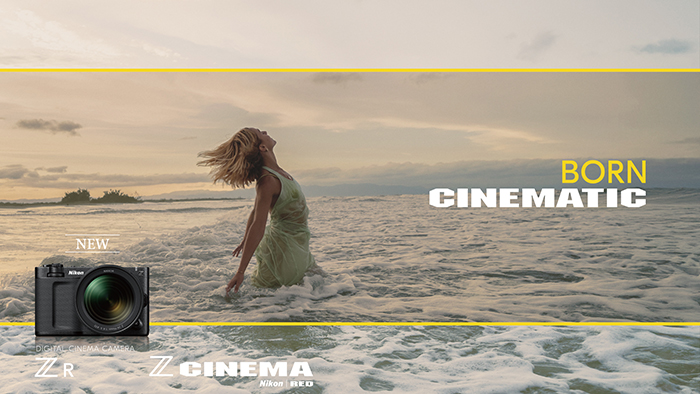
Nikon has globally released the Nikon ZR as a camera that combines Nikon’s technologies with those of RED, which is leading the digital cinema camera industry. Through this product, Nikon provides both filmmakers and video content creators with a tool to produce cinematic images, and aims to develop a new market.
The Nikon ZR (“the ZR”) targets a range of users, including professionals engaging in commercial filmmaking, film production companies, individual creators and students. Nikon developed the ZR as the smallest digital cinema camera in its Z CINEMA camera series by combining its own technologies with those of RED Digital Cinema, Inc. (“RED”), which became a Nikon Group company in 2024. It has been available in global markets since October 2025.
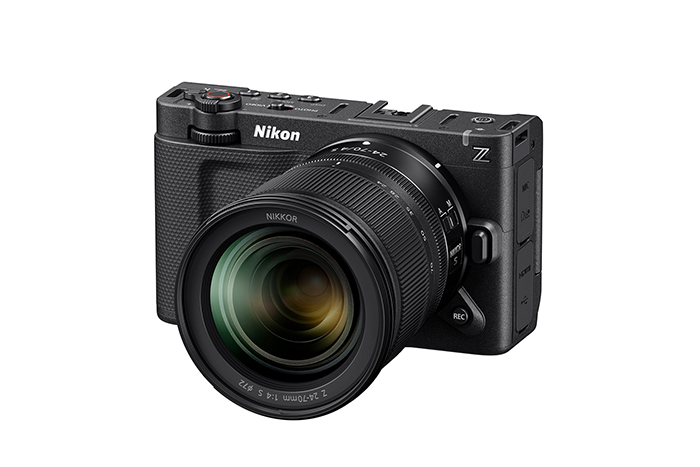
The Nikon ZR
The ZR equipping a full-frame sensor also features R3D NE*1, a new video recording file format based on RED's R3D RAW video recording codec and developed exclusively for Nikon cameras. RED’s codec is widely utilized for shooting Hollywood movies. The camera also supports internal recording of up to 6K/59.94p video when using the camera alone.
The ZR adopts color science and exposure standards developed for RED cameras to enable color reproduction that is on par with high-end RED cameras. Furthermore, it offers two base ISO sensitivities, ISO 800 and ISO 6400*2, as well as a broad dynamic range of 15+ stops*3 to deliver the ultimate in image quality in a variety of situations, including low-light scenes.
In addition, having been developed with uncompromising attention to audio capabilities, the ZR is the world's first*4 camera to support 32-bit float audio recording with both built-in and external microphones. Even when filming a scene that contains a sudden loud sound, post-recording adjustments can be made by using editing software to prevent sound distortion. Further, the built-in microphone offers five pickup patterns for high-quality audio recording, from which users can choose the one most suitable for each scene. Regarding the hardware, although the camera is the first Nikon camera equipped with a highly visible large 4.0-inch monitor, it is the lightest model in the Z CINEMA series, with a weight of approximately 540 g*5. With a minimal system that does not use external accessories such as a microphone and monitor, the ZR users can produce high-quality videos. Mr. Yuichi Kato, UX Planning Dept., Marketing Sector at Nikon’s Imaging Business Unit, explained as follows:
“The ZR is the first compact cinema camera developed by combining both Nikon’s and RED’s technologies. RED was founded in 2005 to offer products for professional use. Its products have been utilized for a range of popular Hollywood movies, and the company is highly rated by those in the filmmaking industry. The ZR enables even individual video creators to make Hollywood-quality images at an affordable price.”
RED’s color science adopted for Hollywood movies is now also available to general users

As one of its primary features, the ZR is the first Nikon camera equipped with an R3D NE video recording format and Cinematic video mode based on RED color science. From a professional perspective, the camera supports Log3G10 and REDWideGamutRGB, enabling exposure standards and colors that are consistent with RED color science. Simply put, the ZR users can easily achieve the RED cinematic look, which is very close to those produced by RED’s high-end cinema cameras, which can cost more than 5 million yen per unit.
“R3D technology used to be available only to a limited number of professionals, but now it is also accessible to general users as well. I hope that individual creators as well as students who want to work in the filmmaking industry in the future will use it,” said Mr. Kato.
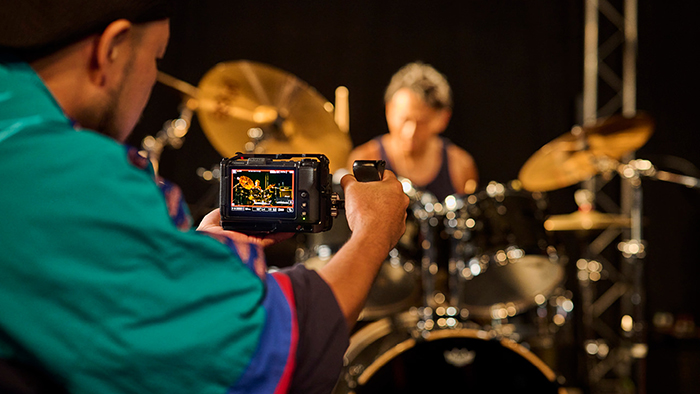
As for sound, the ZR is the world's first camera that supports 32-bit float audio recording with both built-in and external microphones to increase the number of scenes for which audio recording is possible using the camera’s built-in microphone alone. “The built-in microphone supports the same 32-bit float audio recording as external microphones, enabling clear, distortion-free recording of sound ranging from quiet to loud, without requiring on-location volume adjustment. It thereby supports recording a wide range of sound sources, from interviews to live concerts,” explained Mr. Kato.
For immersive audio recording, which used to be difficult even when using an external microphone, the ZR users can select the most appropriate option from five pickup patterns: Front (Super directional), Front, All directions, Rear, and Stereo (binaural), which allows for a range of recording styles without the need to use an external microphone.

Further, the ZR provides a high-performance autofocus function that is indispensable for contemporary cameras. The use of deep learning-based AI technology enables more accurate subject detection and tracking and makes it much easier to capture special moments with greater accuracy. The camera also automatically detects nine types of subjects - including people, animals and vehicles - with high precision, and can even capture distant human subjects accurately. In addition, the vibration reduction function reduces the effects of camera shake to prevent blurring, even with hand-held video recording without using a gimbal. Mr. Mayukh Banerji, Marketing Department, Marketing Sector of Nikon’s Imaging Business Unit made the following comment:
“In this age characterized by the spread of social media, video-making needs have been expanding among both filmmakers and content creators. Despite its compactness, the ZR provides some of the technologies used in high-end RED cameras, and I hope this compact camera will be used by a range of people with ease of mind.”
Aiming for an innovative, game-changing product in the market
The ZR provides even more outstanding functions. Generally, video recording imposes a high burden on the camera due to the need for internal processing, and it is important to design the camera to ensure that heat generated inside the camera is sufficiently dissipated. Accordingly, many cameras are equipped with a cooling fan, thus increasing their size. On the other hand, the ZR’s compact design incorporates efficient, body-wide heat dissipation. Without a cooling fan, it still handles high-demand sessions requiring over two hours of continuous recording, such as weddings, concerts, and interviews.
“It was difficult to design and develop a camera with highly efficient heat dissipation that did not need to use a fan. By overcoming this difficulty, we were able to realize a compact but high-performance product,” explained Mr. Kato.
Further, the ZR supports LUT monitoring on its 4.0-inch LCD, which makes it easier to preview the effects of color grading. It also supports Frame.io Camera to Cloud using Nikon’s NX MobileAir app, automatically transferring video data directly to the cloud for a faster and more efficient post-shooting workflow.
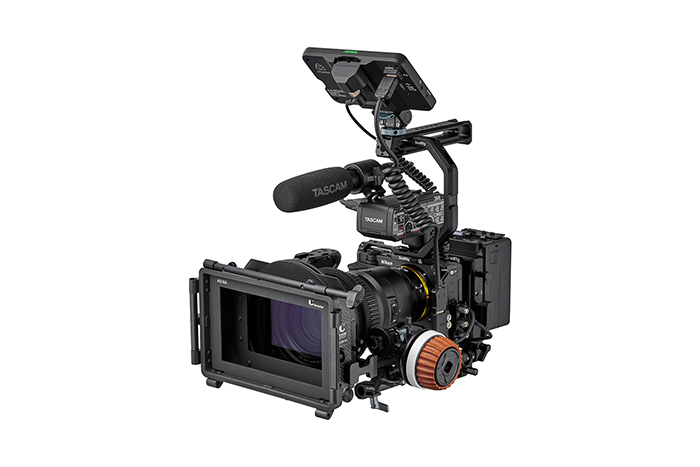
Additionally, the ZR is Nikon’s first camera that incorporates a highly expandable digital accessory shoe*6. This new accessory shoe enables high-quality image creation without using external accessories and provides practical expandability for use by professionals on-site.
Moreover, the camera’s short flange focal distance of 16 mm, which is the shortest among full-frame cameras*6 and represents a defining feature of the Nikon Z mount, enables the use of a wide variety of lenses*7. Also, the ZR provides excellent dust- and drip-resistance and robustness, which are renowned features of Nikon cameras.
The ZR, developed by combining technologies from both Nikon and RED, is an iconic product that was born through mutual efforts made by the two companies, one Japanese and the other American, which have quite different backgrounds.
“For Nikon, the ZR is its first double-name product. RED is a prestigious brand used by those engaged in the imaging industry. Both companies attribute importance to giving first priority to customers, and have released the ZR in the market as an innovative, game-changing product,” said Mr. Banerji.
Mr. Kato added, “We hope that the ZR will be used not only by professionals but by non-professionals as well, including students learning filmmaking, as a digital cinema camera that is usable for various applications.”
*1. A dedicated codec developed for Nikon cameras to record video in R3D format. The file extension is ".R3D".
*2. With R3D NE recording.
*3. Value based on measurements performed by Nikon.
*4. Among cameras with interchangeable lenses that record audio via a built-in microphone and 3.5-mm stereo mini-pin jack.
*5. Camera body only: approx. 630 g including battery and recording media.
*6. Among full-frame digital cameras with interchangeable lenses available as of September 10, 2025. Based on Nikon’s research.
*7. Certain features may be unavailable when other brands lens adapters are used.
INTERVIEWEES

YUICHI KATO
UX Planning Department
Marketing Sector
Imaging Business Unit

MAYUKH BANERJI
Marketing Department
Marketing Sector
Imaging Business Unit
Nikon Corporation
1-5-20, Nishioi, Shinagawa-ku, Tokyo
Since its founding in 1917, Nikon has strived to unlock the power of light to provide new value to society by developing a variety of products and services based on applied optics and precision technologies. Aiming to “provide products and services optimized to meet our customer needs,” the company operates five businesses: the Imaging Business (digital cameras and others), the Precision Equipment Business (semiconductor and FPD lithography systems and others), the Healthcare Business (microscopes and others), the Components Business (optical materials and components and others) and the Digital Manufacturing Business (metal 3D printers).