
2026.03.19

Mitsubishi Kakoki Kaisha Advances the Kawasaki-based “MKK Project”
To Create an “Energy Emergence Zone” for a Sustainable Recycling Society Worldwide!
Mitsubishi Kakoki Kaisha (MKK) is advancing the “MKK Project” to drive innovation. Here, we explore MKK's challenge to build a clean ecosystem, from Kawasaki to the world.
The “MKK Project” was officially launched in July 2025 to achieve Kawasaki-born solutions to social issues using environmental and energy-generating technologies developed with its co-creation partners. Through collaboration with partner companies and organizations across education, sports, food, healthcare, and the environment, the project aims to develop fundamental solutions to societal problems. Through providing a space and opportunity for synergy among things (technology), actions (business), and people (know-how), the project aims to accelerate the development of next-generation technologies and their social implementation to realize a truly sustainable recycling society.
The MKK Project’s goal is to create an “Energy Emergence Zone” that transforms the world into a circular society. Born in Kawasaki, home to MKK’s headquarters, it connects the physical “energy” generated by technology with the “energy” of people's power, bringing about the emergence of a new circulating “energy” that propels the world into the future. Through this initiative, the energy of the Kawasaki region will foster the synergy that encourages new businesses and innovations, establishing an energy circulation mechanism.
MKK will celebrate its 100th anniversary in 2035. Under the vision statement of “endeavoring to realize sustainable development and realizing a comfortable society," MKK seeks to meet customers' latent needs and enter potential markets through new, specific business models designed in partnership with its partners, differentiating them from existing businesses and services using the company's own environmental solutions and energy-generating technologies.
“Through innovation, I want to transform MKK further. And I want to raise public awareness of our company. The MKK Project is one path to achieving that goal,” says Yasuhide Hayashi, Managing Executive Officer and originator of the MKK Project.
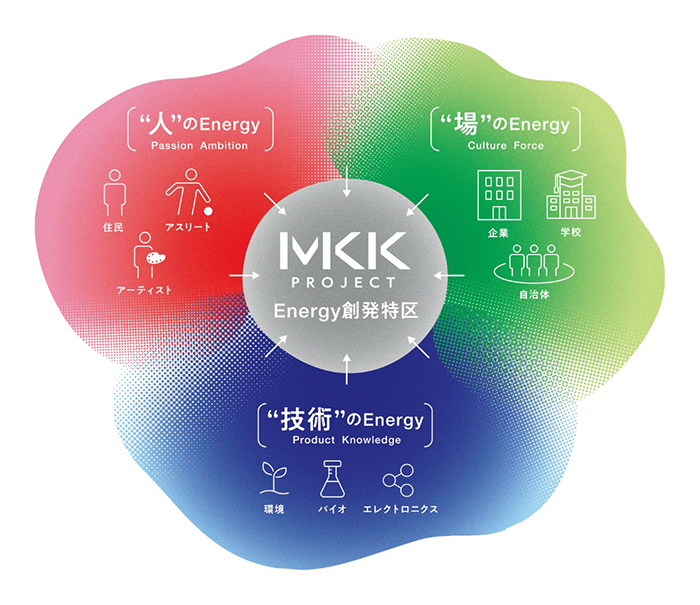
Project structure diagram
Participation in the Kawasaki Arena-City Project
Scheduled to Open in 2030
MKK was founded in Kawasaki and has contributed to the development of Japan's chemical industry, building a strong track record by engaging in the consolidated design, manufacture, and construction of equipment and facilities that have consistently met the needs of the times across diverse fields, including industrial machinery, petroleum, and hydrogen. In 2021, the company formulated the “Mitsubishi Kakoki Group's Management Vision for 2050,” outlining the goals for the group to achieve for the carbon-neutral era. Under the Vision, MKK is advancing a significant transformation across four strategic business domains, including a hydrogen-based clean energy business. The “MKK Project” is one such initiative.
“Creating innovations through co-creation with partners requires agility," explains Hayashi. "However, our company name, size, and history have made it difficult to chart a new course. Therefore, we deliberately established a separate entity, MKKi, to serve as the command center for the MKK Project, to smoothly facilitate collaboration with other companies."
As a part of the MKK Project, the company participates in the Kawasaki Arena-City Project, scheduled to open in 2030. The new arena, with a capacity of up to 15,000 people, will serve as the home for the local B.LEAGUE basketball club, the Kawasaki Brave Thunders, which is also MKK's collaboration partner. The arena will be a mixed-use entertainment facility featuring lodging, dining, art spaces, and parks. MKK aims to create a world-leading eco-friendly arena that achieves CO2 neutrality, or even a CO2-negative status, by recycling food waste generated at the arena into energy feedstock or by installing plant factories.
“With our technology, we can power the arena using clean hydrogen energy without emitting CO2,” Hayashi adds. “Moreover, if we use green hydrogen derived from natural sources such as biogas, we can also reduce the burden on the global environment.”
MKK is also exploring additional ways beyond electricity conservation to create a fully circular arena such as reducing CO2 emissions using fruits and vegetables produced through FoodTech as restaurant ingredients and generating hydrogen from waste previously incinerated or landfilled.
Ecosystem from Kawasaki to the world
The MKK Project is a grand experiment
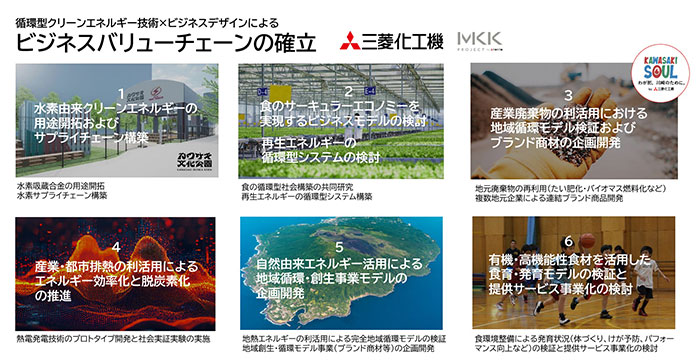
Hayashi, who is spearheading the series of initiatives, was originally an executive officer at Mitsubishi UFJ Bank and became MKK’s managing executive officer in 2025. Ever since, he has been a driving force for the transformation. Currently, he directs the MKK Project and is promoting six projects leveraging the company's technology.
・Developing applications for hydrogen storage alloys and building a hydrogen supply chain
・Joint research on building a circular food society
・Establishing a recycling system for renewable energy
・Reusing local waste (converting to fertilizer, biomass fuel, etc.) and developing linked brand products by multiple local companies
・Prototype development and field testing of thermoelectric power generation technology
・Verification of a fully regional circular model utilizing geothermal energy, planning and development of regional revitalization/circular business models (including branded products)
・Verification of the developmental impacts (physical conditioning, injury prevention, performance enhancement, etc.) of food environment improvements and studies on commercializing related services
These projects are moving forward simultaneously toward implementation.
One such initiative, launched in October 2025, is the “Hydrogen/No Tan Tan Men" Project [“Hydrogen/No Carbon Ramen Project.”] It is a collaboration between Kawasaki City and the original New Tan Tan Men Honpo. This is also an unprecedented project that aims to decarbonize Kawasaki's beloved local ramen-noodle dish, Tan Tan Men, served at the “Original New Tan Tan Men Honpo (main store).” It began with a student studying decarbonization who wondered, “Can we cook ramen without producing CO2 if we replace the gas to boil noodles with hydrogen?” The idea drew in Kawasaki City and others from various fields, and the project was set in motion. Koichi Yamada, Chief of the Planning Department, explains.
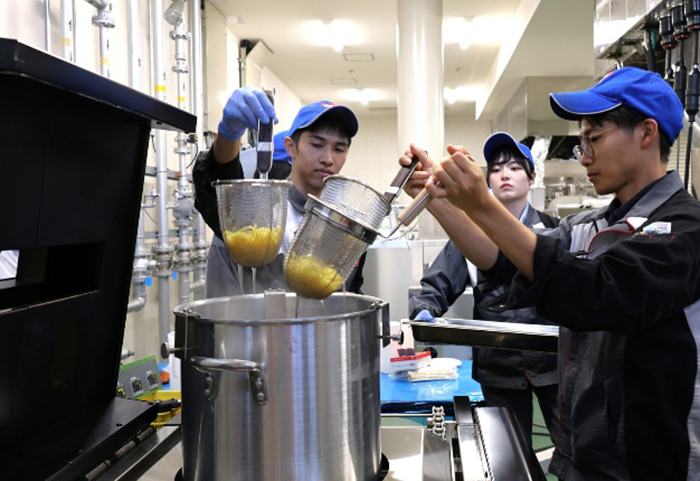
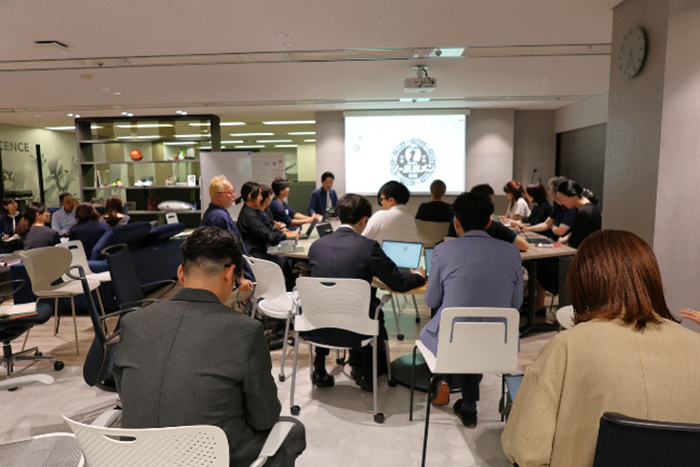
(Left) Development of hydrogen cooking equipment (Right) Meeting in progress
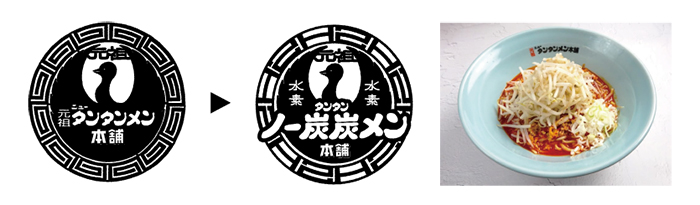
A new logo design pays homage to the original; it shows that no CO2 is emitted thanks to hydrogen use.
"There is little public awareness of different applications for hydrogen. So, we started with areas familiar to everyone in hopes of deepening their understanding, including what our company does. Furthermore, instead of just promoting our technology, we hope to pioneer new applications and develop partnerships."
Still another initiative is a social partnership course themed “Food x Energy Circular Economy" [Course name: “Circular Economy and Sustainable Business”] jointly launched in October 2025 by MKK and Sophia University. A business pitch contest for Sophia University students is planned for next spring. Hayashi shares the following aspirations.
"The first step is establishing MKK as a renowned company here in the city of Kawasaki. Then, from this city that was once plagued by pollution, we aspire to propose clean ecosystems to the world. On that foundation, we hope to garner stakeholders' strong interest and gain solid market recognition. You won't know unless you try. The MKK Project is a grand experiment. I sincerely hope MKK's evolution will inspire people’s interest."
INTERVIEWEES
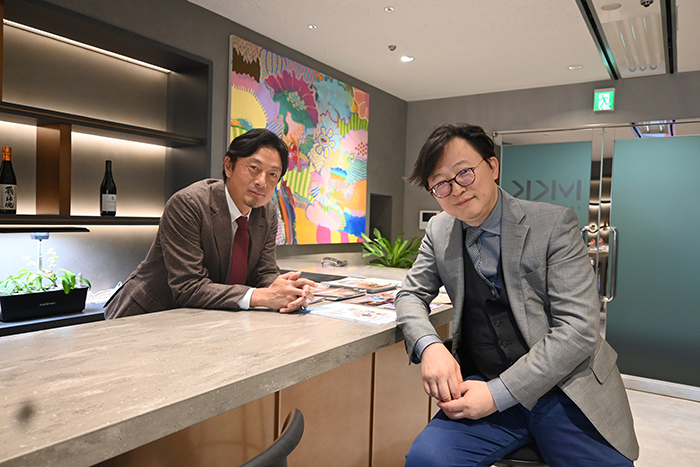
Yasuhide Hayashi (Right)
Managing Executive Officer
(In Charge of Innovation Promotion)
Koichi Yamada (Left)
Planning Department
Chief
Mitsubishi Kakoki Kaisha, Ltd.
Solid Square East tower, 580 Horikawa-cho, Saiwai-ku, Kawasaki, Kanagawa
Financed by Mitsubishi Group companies, the company was founded as Kakoki Seisaku, Ltd. in 1935 to domestically manufacture machinery for the chemical industry. It manufactured an autoclave (reactor) as its first product. Presently, its core businesses involve the plant & environmental equipment construction and engineering business, manufacturing of various machines and the provision of after-sale services. It supplies machines and equipment needed in a range of fields, including natural gas, hydrogen, petrochemistry, semiconductors, electronic materials, ships, medicines and water treatment. It had 1,017 employees on a consolidated basis as of the end of March 2025.